
A Trekker's Guideto Being Ready
There's a particular kind of quiet that settles in about forty minutes into a good trek — the chatter fades, your breathing finds a rhythm, and the trail slowly stops…
Journal — A Trekker's Guide to Being Ready
Getting there has less to do with grit than most people assume, and everything to do with preparation. The trekkers who enjoy themselves most are almost always the ones who spent a few unglamorous weeks walking around and climbing stairs in new shoes. That's what buys you the moment on the other side: that stretch of easy silence with people who were strangers at breakfast, which is the part everyone remembers afterwards, not just the view on top.
As a beginner should start with something you can finish in a single day: fairly uniform elevation and intensity, an optimal distance, one you’re comfortable walking with tiny breaks. A first trek should end with you wanting more, not nursing your knees in silence.
Our Imphal & Hornbill week is exactly the journey a first-time trekker should take. Not a trek, but a walk. You leave Kohima after breakfast, climb to the ridge, drop into the Dzukou valley , and are back at the hotel for dinner the same evening. One day, no camping, no multi-day logistics, nothing to carry but your own daypack. It’s not an expedition; it’s a genuinely beautiful day out.
And if you've never done anything like it at all, there's an even gentler place to begin. A trip like our Itanagar & Ziro week has no treks, yet you're on your feet for hours a day — seeing Apatani villages, wandering the Butterfly Park grounds, standing through festival evenings in fairly uniform terrains. A 2/5 on our difficulty scale, and definitely a good way to find out how your body reacts to a long day of walking, before you ask it to climb.
None of this requires being an athlete. What it requires is a body that isn't surprised by 4–6 hours of continuous walking.
Walk 5–7 km comfortably — not fast, but at a pace you can keep talking without losing breath.
Climb stairs, take them at work or home instead of the lift — the single most trek-specific activity to do in a city. Or you come with Salori to Dzukou — the way up to the ridge and our Mentors and Curators will be the perfect chaperons for your first trekking experience.
Add light strength training specially for the legs — your knees will thank you on the way down.
Work on cardio and endurance with incline walks, so breathing on slopes feel manageable rather than alarming.
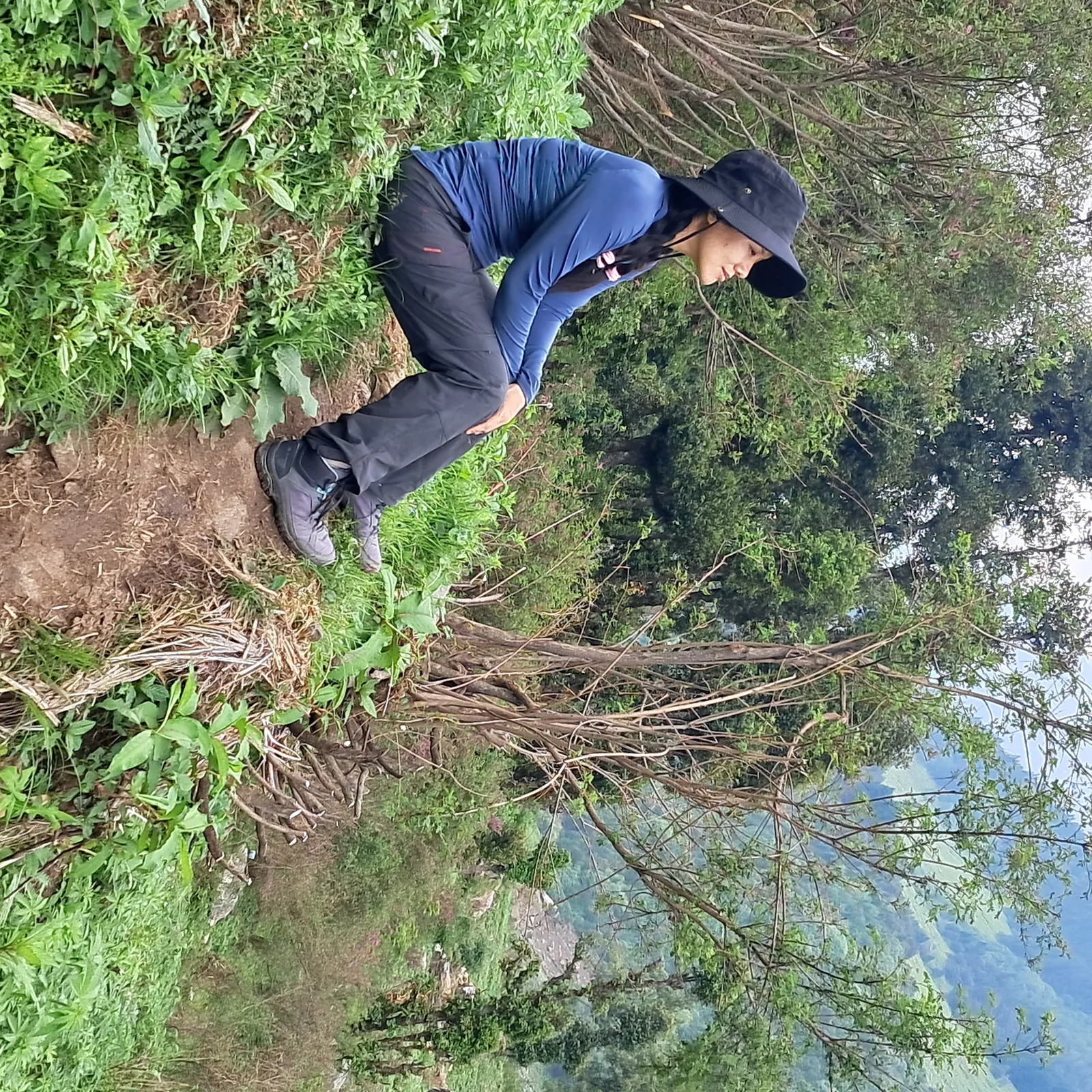
Fitness gets you up the trail. Your shoes and clothes decide whether you enjoy getting there. This is the mistake we see most often, and the one that ruins the most days. It's the difference between enjoying the night and enduring it.
Here are some non-negotiable do keep in mind before going on your first trek:
Use them for every one of your prep walks, so that when you’re at the trailhead your shoes are not a problem: no pinching, no hot spots, no shoe bites.
If you have a spot that tends to rub, stick a band-aid inside the shoe rather than on your foot — it stops the chafing at the source. Walking an uneven ground won't test your ankles, but five days of village paths and festival grounds will absolutely find a badly fitted shoe.
Cargo shorts with long socks are fine on a clean, open trail, but switch to full-length pants with pockets wherever a trek has undergrowth.
Pack a layer for the cold — on most treks, evenings turn cool faster than the afternoon suggests, and a jacket or shawl in your bag isn't optional.
Pack a poncho if rain looks likely, but real insulation if temperatures are dropping.
Pack an extra pair if it starts raining, find dry ground to rest, and change out of wet clothes as soon as it's practical.
The last piece is checking the weather properly — the forecast for the trail, not the nearest city, and the season, not just the week. For instance, Nagaland in early December, around the Hornbill Festival , is properly cold, so adding a warm layer for the evenings is essential. Ziro in late September is the complete opposite — green, lush, and wet, where rain gear matters more than insulation.
Depending on the weather and the terrain, here’s what you need to pack:
Wear and/or carry a cap, sunscreen, sunglasses, and that genuinely blocks the sun — you don’t want to be peeling three days later.
Moisture-wicking t-shirts (avoid cotton, which gets heavy, holds sweat, and takes forever to dry). A rain poncho and waterproof bags for anything that must stay dry (cellphones, watches, even extra clothes.).
Bring a waterproof jacket or wind-cheater, trekking pants, and a light puffer jacket for the cold
Irrespective of weather conditions, your shoes stay consistent — trekking shoes with good grip, a taut sole, and high ankles, fitted true to size. And always carry an extra pair of socks.
A 20–35-litre bag is plenty for a day trek. If you’re likely to be back by the evening, even a 20-litre bag will suffice. But your bag isn't just there for a rain cover; it's carrying your water, your food, and your day.